
Gap Year - Right or Privilege? A Round Square Dialogue on Choice, Opportunity and Access
08 Sept 2026
"Education is not limited to classrooms; every experience can become an opportunity to learn, grow and understand the world." - Anonymous
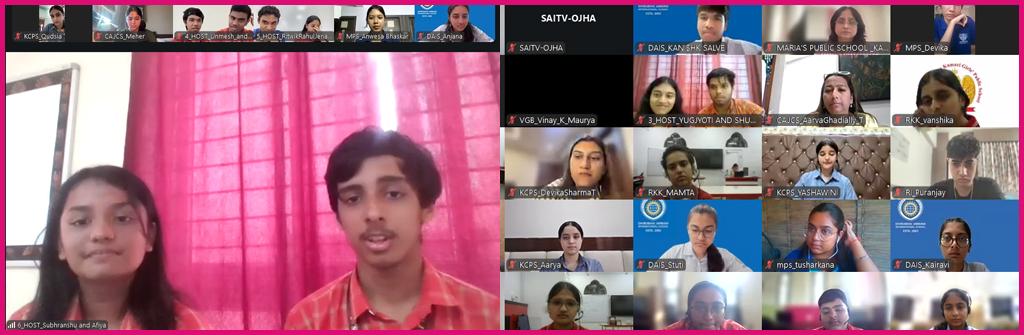
On September 2, 2026, SAI International School hosted a Round Square Zoom Postcard session on the thought-provoking topic, "Gap Year - Right or Privilege?" The session brought together 55 students from 11 schools across India, providing a meaningful platform for students to exchange perspectives on the idea of taking a gap year between school and higher education.
The session began with an introduction to the topic, with student anchors explaining the concept of a gap year and setting the context for the discussion. A presentation provided students with a clear understanding of the theme and outlined the objectives of the session. The discussion aimed to encourage critical thinking, build awareness of diverse educational and cultural perspectives, promote respectful dialogue and active listening, and strengthen communication and collaboration among students from different Round Square schools.
Students were divided into smaller Baraza groups to facilitate focused and meaningful discussions. The central question, "Is a gap year a right or a privilege?â€, encouraged students to examine the concept from multiple perspectives. They explored whether a gap year should be considered a personal choice and educational opportunity available to everyone, or whether it may, in practice, be a privilege influenced by financial circumstances, family support and access to opportunities.
The Baraza discussions explored various ways in which students could use a gap year meaningfully. Participants considered possibilities such as travelling, volunteering, internships, community service, developing new skills, pursuing personal interests, working and preparing for university. They also examined the financial implications associated with several of these opportunities and recognised that not every student has equal access to international programmes, expensive travel, unpaid internships or similar experiences.
An important aspect of the discussion was the understanding that a meaningful gap year does not necessarily require extensive travel or significant financial resources. Students discussed how local volunteering, employment, community projects, skill development and independent learning can also provide valuable experiences. This broadened the conversation and encouraged students to think about how a gap year can be shaped according to individual circumstances, interests and available opportunities.
Following the Baraza discussions, students returned to the main session and shared their group conclusions. Student volunteers presented key points from their respective discussions, while the ideas emerging from the conversations were also documented on Padlet. The exchange reflected the students’ ability to listen to diverse viewpoints, articulate their perspectives and engage respectfully with a complex and relevant question.
The session concluded with a vote of thanks delivered by the students, bringing an appropriate close to a meaningful and engaging discussion. The Round Square Zoom Postcard enabled students to look beyond the conventional understanding of a gap year and reflect on broader questions of choice, accessibility and opportunity, while strengthening critical thinking, communication, collaboration and global awareness.
Photo Highlights
.jpg?dpl=dpl_Dop5havP8WPY9gaWdsXW5o6wArxF)
.jpg?dpl=dpl_Dop5havP8WPY9gaWdsXW5o6wArxF)
.jpg?dpl=dpl_Dop5havP8WPY9gaWdsXW5o6wArxF)
.jpg?dpl=dpl_Dop5havP8WPY9gaWdsXW5o6wArxF)
.jpg?dpl=dpl_Dop5havP8WPY9gaWdsXW5o6wArxF)
.jpg?dpl=dpl_Dop5havP8WPY9gaWdsXW5o6wArxF)
.jpg?dpl=dpl_Dop5havP8WPY9gaWdsXW5o6wArxF)
.jpg?dpl=dpl_Dop5havP8WPY9gaWdsXW5o6wArxF)
.jpg?dpl=dpl_Dop5havP8WPY9gaWdsXW5o6wArxF)
.jpg?dpl=dpl_Dop5havP8WPY9gaWdsXW5o6wArxF)
.jpg?dpl=dpl_Dop5havP8WPY9gaWdsXW5o6wArxF)
.jpg?dpl=dpl_Dop5havP8WPY9gaWdsXW5o6wArxF)